At a2o, we believe it is essential that residential architecture also supports the well-being of older adults. But which design principles help architects turn this ambition into reality? Over the past year, a2o therefore took part in a research-by-design trajectory initiated by HOUSE-research. Together, we explored which design choices throughout the design process can enhance the well-being of older people. Today, these insights have been brought together in the inspiring design guide “Room for Well-being.”
Our participation in the HOUSE trajectory confirmed how much housing is about more than adding up standards, floor areas, and numbers. In our design practice, we continuously search for the poetry of living: what makes a place truly feel like home? HOUSE did not offer us a new checklist, but rather a shared language and a set of design drivers to engage in dialogue about this often intangible quality of living. The trajectory clearly demonstrated that subjective well-being cannot be fully captured in measurable criteria, and that leaving room for adaptability, personalisation, and small, meaningful moments is essential.
The guide is not a checklist. Instead, it is structured around five design drivers that show how architecture can contribute to autonomy, memory, change, diversity, and encounter — now and in the future.
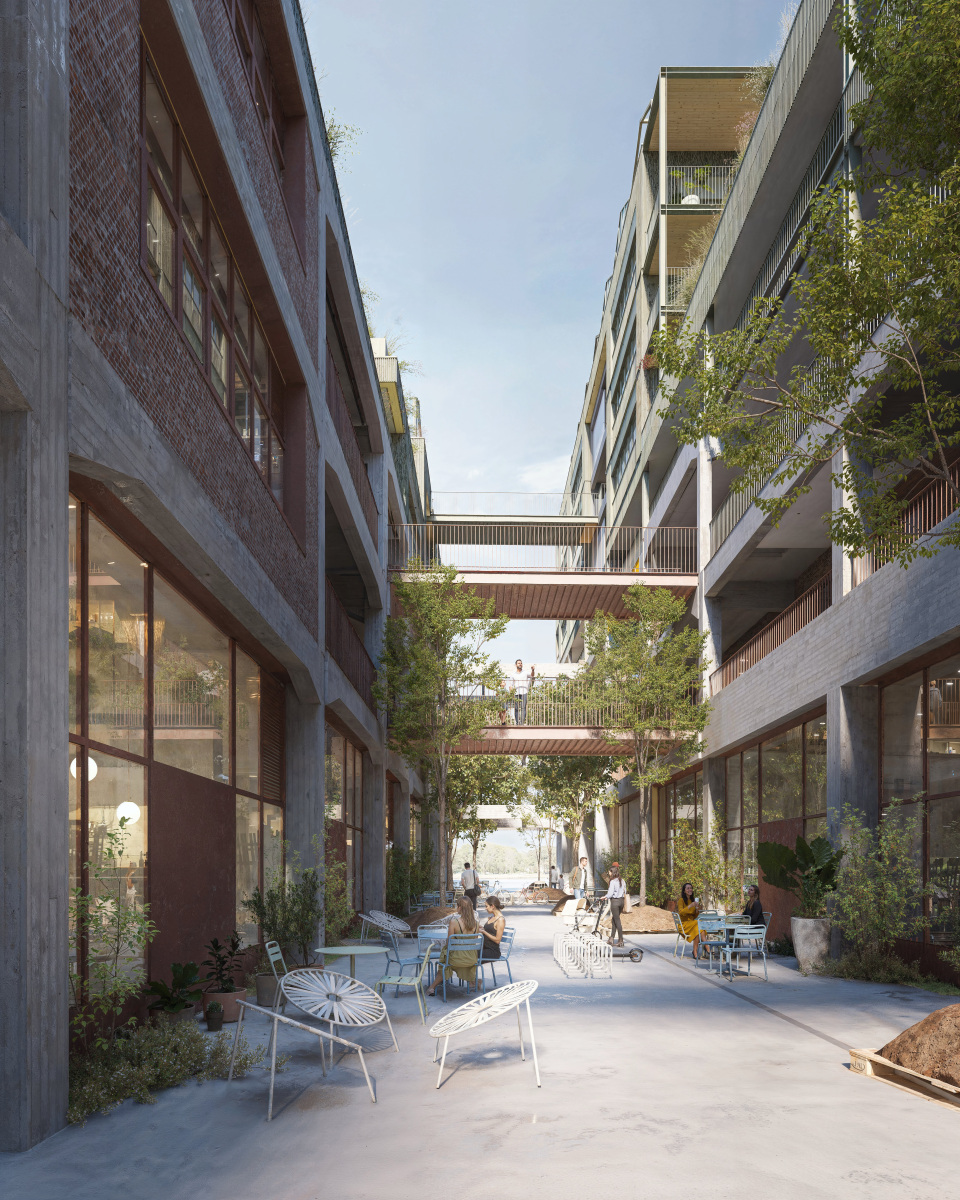
A concrete project in which we recognise these themes is the adaptive reuse of the former Kruitfabriek into a hybrid place for living and working. In this project, architecture deliberately acts as a backdrop for living, with a strong focus on flexibility, changeability, and the design of small, meaningful moments. Rather than fixing everything in advance, we leave space for appropriation and evolution over time.
The HOUSE project is a four-year interdisciplinary research project (Faculty of Architecture and Arts UHasselt, SARlab VUB, PXL). The research-by-design trajectory, led by HOUSE researchers Micheline Phlix and Elke Ielegems, was carried out together with two other architectural practices: RE-ST and Osar.
The design guide is freely available via the HOUSE website.